
Tech stack audit
Your Best Shopify Apps Consultant for a Leaner, Faster Stack
Fewer apps, lower bills, faster pages and a stack your team understands.
Working with SAL as your best Shopify apps consultant means an independent, line-by-line review of every app, script and subscription running in your store. We uncover overlapping tools, hidden speed drains and costly gaps, then recommend a leaner, better-connected stack with a clear plan to consolidate safely, so you stop paying for software nobody uses and get far more from the tools that genuinely drive sales, retention and smooth day-to-day operations across your business, all for a fixed fee.
Prefer to talk? Call +44 7476 560011 or message us on WhatsApp (opens in new tab)

When your app stack needs a second look
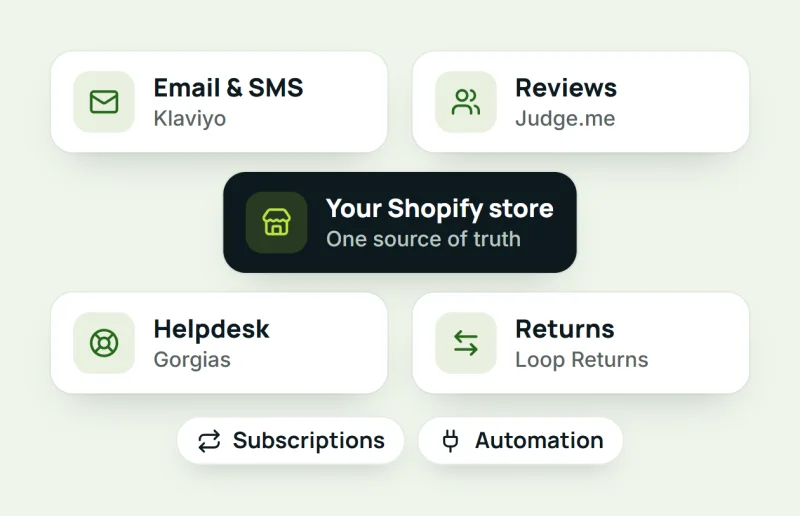
Browsing lists of the best shopify apps is easy; knowing which ones your store actually needs is much harder. Most stacks grow one decision at a time: a reviews app for a product launch, a pop-up tool for Black Friday, a bundles app trialled and forgotten. Each made sense at the time. Together, they create rising monthly bills, slower pages, conflicting scripts and code left behind by apps uninstalled months ago.
A tech stack audit is a smart move for:
The outcome is clarity: one clear tool per job, lower running costs and a store that's quicker for customers and simpler for your team to run.
- Brands with a long list of apps and a nagging feeling that several of them do the same job.
- Finance directors and founders questioning software spend that creeps up every quarter.
- Ecommerce managers who inherited a stack from a predecessor or previous agency, with little documentation.
- Stores with sluggish mobile pages where third-party scripts are the likely culprit.
- Marketing teams who distrust their numbers because several apps fire their own tracking pixels and report conflicting results.
- Brands planning a redesign, replatform or Shopify Plus upgrade who want a clean foundation first.
What a stack audit with our Shopify apps consultant covers
Every audit looks at cost, performance, data and security together, because an app that's cheap but slow, or fast but leaky, is still a problem worth fixing.
Full app and script inventory
We list every installed app, theme app embed, tracking pixel and leftover snippet, along with its monthly cost, owner and purpose. The inventory frequently turns up code still running from tools uninstalled long ago.
Overlap and redundancy review
We pinpoint tools doing the same job, such as two review platforms, several pop-up apps or an upsell widget duplicating your theme's built-in recommendations, then advise which to keep based on features, cost and fit.
Native feature check
Shopify now includes features that once needed paid apps, from bundles and subscriptions to Shopify Flow automations and Shopify Forms. We highlight where native tools could replace a subscription without losing anything important.
Speed and performance impact
We measure how much each app adds to load times, especially on mobile product and collection pages, and rank the heaviest offenders so you know exactly where performance gains are hiding.
Cost and renewal review
We total your monthly and annual app spend, flag plans you've outgrown or never needed and note renewal dates, so you can act before the next invoice lands rather than after it.
Data flow and integration map
We chart how customer, order and product data moves between Shopify, email, helpdesk, accounting and fulfilment tools, spotting broken syncs, duplicate records and manual workarounds your team has quietly adopted.
Security and permissions audit
Each app's access scopes, staff accounts and API connections are checked against least-privilege principles. We flag apps with broader permissions than they need, abandoned integrations and former staff who still have access.
Gap analysis
Overlap is only half the story. We also identify jobs your stack handles poorly, such as returns, site search or post-purchase messaging, and outline the tools worth considering for each one.
Recommended stack and shortlists
You receive a recommended stack showing what to keep, replace, remove or add, with balanced shortlists where choices are close. Vendor pricing is described by model, with official websites listed for current plans.
Consolidation roadmap
Changes are sequenced to limit risk: what to remove first, which data to migrate, how to protect review content that supports SEO and when to switch tools around your trading calendar.
Findings workshop
A live session on Zoom or Google Meet walks your team through what we found and why it matters, then turns those findings into agreed priorities that reflect real workloads and budgets.
Theme code clean-up review
We look for app snippets hard-coded into theme files, duplicate script tags and outdated embeds, then estimate the effort to remove them safely. Cleaner code means fewer surprises when you update your theme or switch tools later.
Vendor and support assessment
For your most important apps, we consider support quality, documentation and how actively each vendor maintains its Shopify integration, so you are not depending on a tool that is quietly being left behind.
From cluttered stack to lean, documented setup
A stack audit moves through four stages, each producing something your team can use straight away. The overall length depends on the number of apps, stores and integrations involved, and is fixed in your proposal before we begin.
Stage 1
Inventory
- Every app, script, pixel and integration is listed with its monthly cost, purpose, renewal date and internal owner.
- Short conversations with marketing, service and operations staff reveal which tools are loved, tolerated or quietly ignored.
Stage 2
Analyse
- Speed, overlap, data flow and security checks are run across the whole stack together, not one app at a time in isolation.
- Native Shopify alternatives and gaps in coverage are assessed against your growth plans for the next year or two.
Stage 3
Recommend
- A recommended stack and shortlists are presented live in a workshop, with every trade-off explained plainly.
- Priorities are agreed against budget, team capacity and busy trading periods such as Christmas.
Stage 4
Consolidate
- Removals, replacements and data moves follow the agreed order, each one tested on a preview theme before going live.
- Your documented stack becomes the reference point for every future app decision you make.
Stages, not fixed durations. Timings are agreed with you once the scope is clear.
How a tech stack audit runs
A stack audit uses the first half of our 10-step delivery process, so access, peer review and sign-off are handled exactly as they would be on a full build.
Discovery and NDA
Before you share a single report, we sign an NDA. Together we then agree the questions the audit must answer, such as reducing spend, improving speed or preparing for a rebuild.
Fixed proposal
You receive a written scope covering the stores, apps and integrations in the review, with a fixed fee and a clear delivery date for your findings.
Read-only access
Audits rarely need edit rights, so we ask for read-only, least-privilege accounts, secured with 2FA, stored in a password manager and logged throughout.
Audit and peer review
Specialists audit cost, speed, data and security in parallel, and a second reviewer challenges every finding before it reaches your written report.
Workshop and roadmap
We present findings live, agree priorities with you and deliver a written roadmap with owners, effort estimates and the safest order of change.
Implementation and offboarding
We can carry out the changes at a fixed price, brief your developers or step back. At the end, our access is removed and your data deleted.
Tools behind our stack audits
Opinions about apps are easy to come by. Our recommendations rest on measurement, using these tools to see exactly what each app costs your store in speed, data quality and money, before anything is switched off.
Shopify admin and app settings
Installed apps, access scopes, staff permissions and billing history, reviewed directly in your store.
PageSpeed Insights and Lighthouse
Lab and field performance data showing how scripts affect mobile loading and interaction.
Chrome DevTools
Network and performance traces that attribute requests and blocking scripts to individual apps.
Shopify Theme Inspector for Chrome
Liquid profiling that reveals which app snippets slow down server-side rendering of your theme.
Tag Assistant and GA4 DebugView
Checks for duplicated pixels, missing events and tracking that ignores consent choices.
Microsoft Clarity
Session recordings that show whether pop-ups, widgets and badges help shoppers or get in their way.
Stack map and cost register
A shared visual map and spreadsheet of every tool, its connections, owner and renewal date, which your team keeps afterwards.
Vendor documentation and listings
Official documentation, changelogs and Shopify App Store listings, checked so our advice reflects what each tool does today rather than last year.
The AI angle: choosing AI apps with your eyes open
Almost every app vendor now markets AI features, and many charge more for them. That creates a new kind of overlap: three different tools each offering AI product descriptions, AI chat or AI recommendations, while Shopify Magic and Sidekick already sit inside your admin. Part of every stack audit is untangling these claims so you pay for AI once, in the place it does the most good.
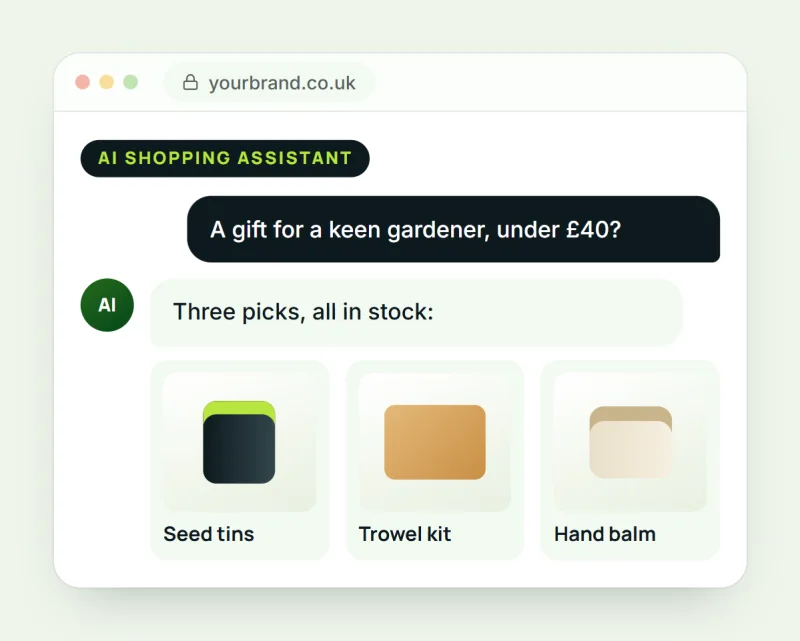
When we assess AI features, we ask:
Our own use of AI in audits is limited and supervised, for example to group app reviews or summarise documentation, with every conclusion checked by a specialist, and we never use client data to train AI models. If AI is central to your plans, our AI Consulting for Shopify Brands service explores opportunities in more depth.
- Does this AI feature solve a real problem for your customers or team, or is it simply a new upsell tier?
- Does it duplicate something Shopify, or another app you already pay for, provides?
- Where does customer data go, is it used to train the vendor's models and does that fit UK GDPR obligations?
- Can your team review AI output before customers see it?
App stack
App stack builder: the lean benchmark
Our starting principle is one strong tool per job, with native Shopify features used first. This benchmark shows the jobs most UK DTC stores need covered, with well-known options we often shortlist.
Popular tools by job
Tool names are examples; trademarks belong to their owners.
Native Shopify first
Built-in tools that can replace several paid apps before you add anything new.
- Shopify FlowAutomation without a separate subscription
- Shopify BundlesFixed bundles and multipacks
- Shopify FormsSign-up and lead capture forms
Lifecycle messaging
One platform owning email, SMS and segmentation, rather than three partial tools sending mixed messages.
- KlaviyoEmail, SMS and customer segmentation
- Shopify EmailSimple native option for smaller lists
Social proof
A single reviews platform feeding product pages, Google and email.
- Judge.meBudget-friendly reviews with strong basics
- OkendoReviews plus UGC and surveys
Search and merchandising
Helping shoppers in large catalogues find the right product quickly.
- Boost AI Search & FilterFilters, search and merchandising rules
- RebuyRecommendations and cart upsells
Post-purchase
Service and returns handled in connected tools that protect margin and reputation.
- GorgiasHelpdesk with order context
- Loop ReturnsExchanges before refunds
Stack audit and consulting pricing
All prices are one-off and fixed, ex VAT. Full multi-store audits and ongoing advisory are quoted as Custom. For broader shopify website cost context, see our pricing page.
Starter
From £495 one-off, ex VAT
Best for: One critical tool reviewed, set up properly, connected and walked through with your team.
What it covers:
- Settings and overlap review
- Reconnected to Shopify and analytics
- Walkthrough for the people using it
Growth
From £1,495 one-off, ex VAT
Best for: Up to four tools reviewed and reworked, with automations, call tracking and training.
What it covers:
- Overlap, speed and data checks
- Automations rebuilt or simplified
- Training for the people using each tool
Custom
Get a quote
Best for: Full stack audit with roadmap, multi-store reviews or advisory. Get a quote.
What it covers:
- Complete inventory and stack map
- Findings workshop and roadmap
- Scope agreed after discovery
Fixed prices, agreed before work starts. All prices exclude VAT.
Compare every service on our Shopify pricing page.
Audits reveal a lot, so they stay confidential
- NDA signed before any data is shared
- Least-privilege access with 2FA
- UK GDPR and data processing terms
- Your data never trains AI models
A stack audit exposes the inner workings of a business: software spend, customer data flows, staff access and the weak spots in your tracking. So every audit is carried out under NDA, and no client name, audit report or savings figure ever appears on our website. You get the same discretion from your first enquiry onwards.
What we can do is show you the method. In a live screen-share on Zoom or Google Meet, a senior consultant takes you through anonymised audit material, including:
- a sample app inventory and cost register
- how we trace a slow page back to a specific app script
- a stack map showing data flowing between tools
- the format of a consolidation roadmap and how teams work through it
Bring a screenshot of your installed apps if you like, and we'll talk through our first impressions on the call, with no obligation to go further. Audits come with our standard protections: a signed NDA before any access, a non-solicit agreement, read-only or least-privilege accounts with 2FA, UK GDPR-compliant processing and your data deleted at the end of the engagement. Our security and privacy page explains each safeguard in detail, or you can Book a Live Walkthrough today.
Turn your audit into action
Best Shopify apps integration
Once the recommended stack is agreed, our integration team installs, connects and tests each new or replacement tool at a fixed price.
Best Shopify apps training
Make sure your team actually uses the tools you decide to keep, with practical training tailored to each role.
What does a Shopify apps consultant do?
A Shopify apps consultant reviews the tools your store relies on, works out which ones earn their place and recommends what to keep, replace, remove or add. At SAL, the same specialists also install and integrate apps, so every recommendation is grounded in hands-on experience rather than vendor marketing.
How many apps is too many?
There's no magic number. A store with plenty of apps can run well if each one has a clear job, loads efficiently and connects cleanly. Trouble starts when tools overlap, slow pages down or sit unused while still billing every month. Our audit judges each app on value, not on the length of the list.
How do you decide which app is best for us?
We weigh features against your real needs, total cost as you grow, performance impact, quality of support, data access and how well the tool integrates with the rest of your stack. Where two options are close, we set out the trade-offs plainly and leave the final choice with you.
Will removing apps break our store?
Not if it's done carefully. Uninstalling an app can leave code in your theme, orphaned data or features that quietly stop working. Our roadmap sequences every removal, exports data where needed and tests each change on a preview theme first, so customers notice nothing except a faster store.
Can an audit save us money?
It can, through cancelled duplicate subscriptions, plan downgrades or native Shopify features replacing paid apps. Savings aren't guaranteed, though, and sometimes the right recommendation is investing in a better tool. Either way, you'll see the full cost picture and the reasoning behind every change before deciding anything.
What do we receive at the end of the audit?
A written report with the full app and script inventory, overlap, speed and security findings, a recommended stack and a sequenced consolidation roadmap. We present it in a live workshop, answer questions and leave you with a document you can share with directors, developers or another agency.
Can you review an app before we buy it?
Yes. If you're weighing up a new tool, we can assess it against your current stack before you commit: whether it overlaps with something you already pay for, how it will affect speed, what data it needs and how well it integrates. It's a quick way to avoid an expensive mistake.
Can you implement the recommendations too?
Yes. Once you approve the roadmap, our integration specialists can remove, replace and connect tools at a fixed price, and our trainers can bring staff up to speed. You're equally free to hand the plan to your in-house developers or another partner, because the roadmap belongs to you.
Find out what your apps are really costing you
Send us a list or screenshot of the apps installed in your Shopify admin, and we'll propose a fixed-price stack audit led by a specialist consultant, with clear findings, a recommended stack and a safe, step-by-step plan to consolidate without disrupting trading.
Free consultation
Get help with your app stack
Share your details and a member of our team will follow up to arrange a brief discussion.
Tell us about your project
What happens next
- You send your store and project details.
- We follow up to arrange a short call.
- On the call, we talk through your goals and explain how we would scope the work.
Talk to us directly
Waverley House, 9 Noel St, London W1F 8GQ
Phone +44 7476 560011 WhatsApp +44 7476 560011 (opens in new tab) Email hello@shopifyagencylondon.co.ukPrefer the full contact page? Visit our Contact / Free Consultation page.