
Search for the best Shopify agency in the UK and you will find a long list of options, from solo freelancers to large London consultancies. Picking the wrong partner costs more than money: missed launch dates, a store your team cannot edit and months of rework. We are a shopify agency ourselves, so read this with that in mind, but the checklist below works whoever you hire, and it will help you compare proposals fairly and choose with confidence.
What does the best Shopify agency look like for your brand?
There is no single winner for everyone. A new Cardiff skincare start-up needs speed, sensible defaults and a lean budget. A Birmingham furniture retailer with a trade arm needs integration experience and B2B know-how. Define what success looks like first, then judge agencies against that picture rather than against each other's marketing. The right partner will happily tell you when a smaller scope, a premium theme or a phased launch would serve you better than the biggest package on their price list.
1. Write your brief before you shortlist
A one-page brief should cover your goals, catalogue size, target markets, must-have integrations, launch window and budget range. Share it with three or four agencies so you can compare like for like, and notice which ones ask sharp follow-up questions rather than sending a template proposal.
2. Check Shopify depth, not just design flair
- Ask how they would approach your checkout, apps, data migration and integrations.
- Check their listing in the Shopify Partner Directory, and verify any partner status claims there rather than trusting a badge on a slide.
- Ask which parts of the build they would avoid customising, and why.
3. Ask about process and people
Find out who your day-to-day contact is, who writes the code and whether any work is outsourced. Ask how work is quality-checked before you see it, how feedback rounds work and how often you will receive progress reports. Agencies with a dedicated project manager and a documented delivery process tend to run calmer projects. Ask what happens when a deadline is at risk, and how quickly you will hear about it.
4. Compare pricing models fairly
Fixed price
Best when scope is clear. You know the cost up front, the agency carries the delivery risk, and any changes are handled through an agreed change process rather than surprise invoices.
Day rate or retainer
Useful for ongoing optimisation or uncertain scope, but insist on clear reporting so hours translate into visible progress.
5. Review proof, even under NDA
Many agencies work under non-disclosure agreements and cannot name clients publicly. That is normal. Ask for a live walkthrough of relevant builds on a video call instead, and focus on how problems were solved rather than on logos.

6. Put security and AI use on the agenda
Ask whether an NDA is signed before data is shared, how store access is granted and removed, and how UK GDPR is handled. Ask how the agency uses AI, too, and whether your data could be used to train models. You can see our own approach in How We Help Clients with AI.
7. Plan for life after launch
Launch is the start, not the finish. Ask which support plans exist, how urgent issues are prioritised, who keeps apps and the theme up to date and how improvements are scheduled. A partner that also covers CRO, SEO and email marketing can keep growth moving without you briefing a new supplier every quarter.
Red flags to watch for
- A quote that arrives before anyone has asked about your business.
- Vague answers about who will do the work.
- No mention of testing, redirects or post-launch support.
- Requests for full admin access before a contract is signed.
- Guaranteed revenue or ranking promises.
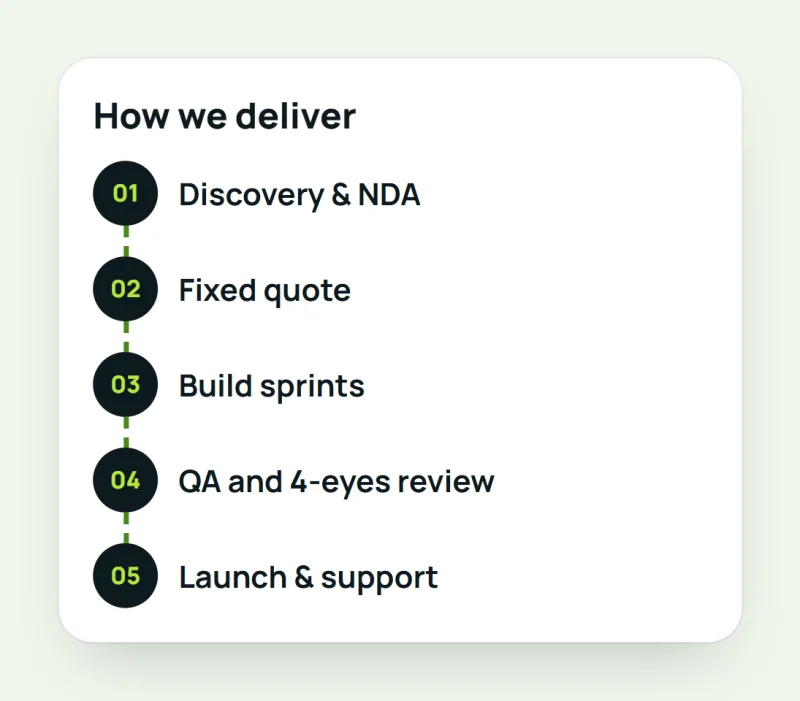
At Shopify Agency London, every project includes a dedicated PM, specialist leads, QA with 4-eyes review, a fixed price and weekly reporting, so you can hold us to the same checklist.