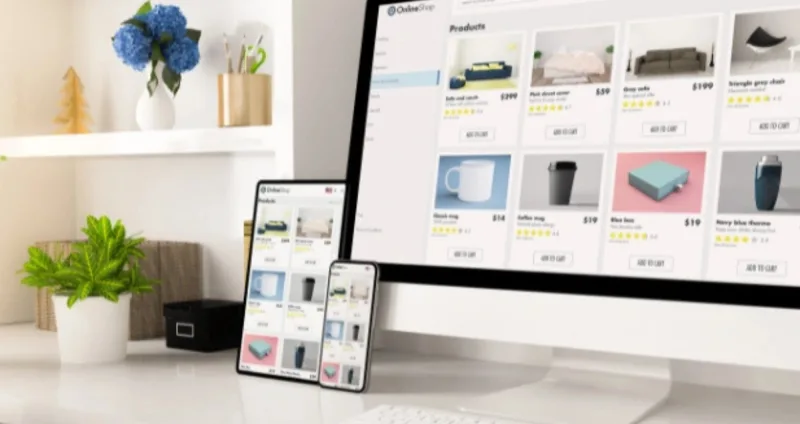
Desktop monitor, tablet and phone showing the same online store

Shopify Development

How Much Does a Shopify Website Cost in the UK?

What drives Shopify website cost in the UK? Plan fees, themes, apps, design and build explained, plus our fixed-price packages. Read on and get a quote.

In this article (7 sections)
  1. What makes up a Shopify website cost?
  2. Shopify platform fees: your monthly baseline
  3. Theme-based store or custom design?
  4. Hidden costs UK merchants often miss
  5. Three typical UK scenarios
  6. How to keep your Shopify build on budget
  7. What our fixed-price packages include

Key takeaways

  • Your Shopify website cost has two halves: the one-off build (design, development, data and launch) and the running costs that follow every month, such as your Shopify plan, paid apps and payment processing. Budget for both from day one so the store launches strong and stays affordable as you scale.
  • Scope moves the number more than anything else. A theme-based store with a tidy catalogue sits at the lower end, while custom design, complex integrations, B2B pricing or a large product migration push a build into a higher tier. That is fine, as long as each extra earns its keep.
  • Apps are the quiet budget creep. Each subscription looks small on its own, yet a stack of reviews, subscriptions, search, loyalty and returns tools adds up quickly. Choose every app against a clear job to be done, and remove the ones that overlap or that nobody on the team actually opens.
  • Fixed prices protect cash flow. An agency that agrees scope, price and timeline in writing before work begins removes open-ended day-rate risk and gives your finance team a figure it can plan around, rather than an estimate that grows after every meeting.
  • Cheap builds often cost more later. Skipping QA, accessibility, speed work or proper redirects tends to resurface as lost conversions, rework or a rushed rebuild within a year or two. Ask what is included in testing and launch, not just how attractive the headline package price looks on paper.

Ask five agencies about Shopify website cost and you may hear five very different answers. Nobody is hiding anything: "a Shopify website" can mean a tidy theme-based shop for a new Bristol candle brand or a multi-market build for a London fashion label with wholesale accounts. This guide breaks the Shopify website cost into the parts you actually pay for, so you can set a realistic budget and question any quote with confidence.

What makes up a Shopify website cost?

Every project splits into one-off and ongoing costs. The one-off part usually covers:

  • Discovery and planning: goals, sitemap, integrations and a fixed scope.
  • Design: adapting a theme or designing custom templates for your brand.
  • Development: theme build, app configuration, custom sections and links to ERP, 3PL or accounting tools.
  • Content and data: product imports, collections, metafields and policy pages.
  • QA and launch: device testing, payment tests, redirects and a go-live checklist.

The ongoing part covers your Shopify subscription, paid apps, payment fees, theme updates and the support you need once the store is trading.

Shopify platform fees: your monthly baseline

Shopify charges a monthly plan fee, with standard plans for most growing brands and Shopify Plus for high-volume or complex businesses. Card processing fees vary by plan and payment method, and using a third-party gateway instead of Shopify Payments can add an extra transaction fee. Plan prices change, so check the current UK figures on Shopify's own website rather than trusting an old blog post, and compare monthly with annual billing before you commit.
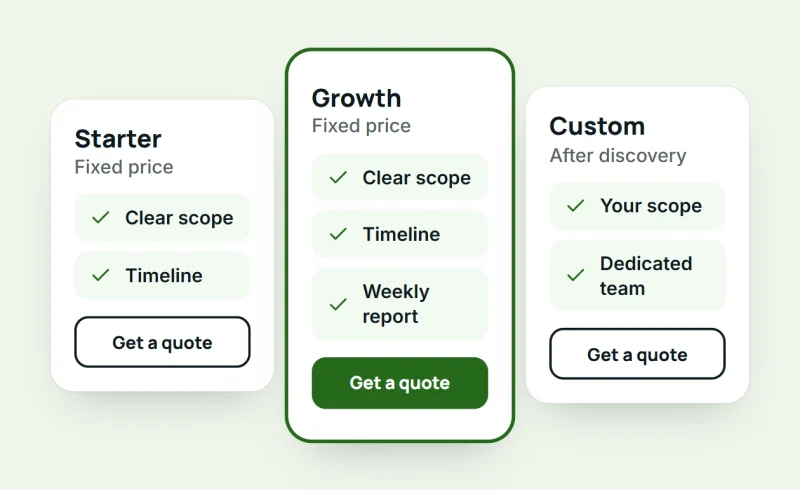
Illustration of fixed-price tiers for Starter, Growth and Custom projects

Theme-based store or custom design?

Theme-based store

A quality theme from the Shopify Theme Store gives you proven layouts, mobile-ready templates and ongoing updates. Tailored with your branding, photography and a few custom sections, it is the fastest route to a professional launch and the lower-cost option for a new DTC brand.

Custom design store

A custom design starts from your customers and brand rather than a template. Product pages, navigation and merchandising are shaped around how people buy from you, which matters in crowded UK categories such as beauty, fashion and homeware. It takes longer and costs more, but every template is built for your conversion goals.

Hidden costs UK merchants often miss

  • App subscriptions for reviews, subscriptions, search, loyalty and returns.
  • Photography and copy: a new store only converts if products are shown well.
  • Migration: moving products, customers, orders and URL redirects from WooCommerce, Magento or Wix.
  • Integrations with stock, fulfilment, accounting or ERP systems.
  • VAT and compliance: correct tax settings, cookie consent and legal pages.
  • Post-launch support for fixes, updates and new features.

Team planning around a whiteboard covered in sticky notes

Three typical UK scenarios

To see how scope shapes the bill, picture three common briefs:

  • A new skincare brand in Leeds with a focused range and a small team. A well-chosen premium theme, tailored branding and a lean app stack usually fits the Starter tier.
  • An established homeware retailer moving up from a tired template. Custom product pages, richer merchandising and a Klaviyo integration point to the Growth tier.
  • A fashion label selling to stockists and EU shoppers. B2B price lists, several markets and an ERP feed call for a Custom quote or a Shopify Plus build.

How to keep your Shopify build on budget

Start with a written scope and a fixed quote. Prioritise features that drive revenue at launch and park the nice-to-haves for phase two. Reuse what already works, such as strong product photography, existing copy and your email list, and question every app before it goes in. AI can trim effort too: built-in tools help with first-draft product copy and admin tasks, and our guide to AI for Shopify Stores shows where automation saves real hours.

What our fixed-price packages include

At Shopify Agency London every build follows the same corporate-grade process: NDA and discovery, a fixed quote, sprint delivery led by a dedicated project manager, QA with 4-eyes review, weekly reporting and SLA support after launch. Starter covers a theme-based store, Growth covers a custom design store, and Custom is quoted for complex or multi-market builds. Starting prices for each sit in the FAQs below.

Budget tips before you brief an agency

  • Write a one-page brief

    List your goals, catalogue size, must-have integrations, target markets and ideal launch window on a single page. Agencies can then quote like for like, and you can quickly spot which proposals have padded the scope or quietly left out essentials such as redirects, QA, analytics setup or training for the people who will run the store.

  • Split launch must-haves from phase two

    Rank every feature by its likely impact on revenue or operations. Launch with what unlocks sales, such as fast product pages, clear delivery messaging and trusted payment options, then schedule quizzes, loyalty schemes or advanced personalisation for a second phase once real customer data shows which of them is genuinely worth building.

  • Audit apps before you add them

    For each proposed app, ask what job it does, what it costs each month and whether your theme or Shopify itself can already handle it. Fewer apps usually means a faster storefront, cleaner code and smaller recurring bills, which helps both conversion and margin while making future redesigns far simpler to scope.

  • Ask what happens after launch

    A store is never really finished. Check whether the quote includes a warranty period, how support is billed, who handles Shopify and app updates, and how urgent issues are prioritised. Clear answers now prevent surprise invoices during your first busy trading period, whether that is Black Friday, Christmas or a big seasonal product launch.

Cut running costs with Shopify's built-in AI toolsShopify Magic & Sidekick Setup

FAQs

Shopify website cost FAQs

Straight answers before you get in touch. More in our FAQs.

How much does a Shopify website cost with Shopify Agency London?

Our fixed-price Shopify Store packages start from £1,995 ex VAT for a Starter theme-based store and from £4,995 ex VAT for a Growth custom design store. Builds with complex integrations, multiple markets or bespoke functionality are quoted as Custom. Every price is agreed in writing before work starts, so the figure you approve is the figure you pay.

What does a Shopify Plus build cost?

Our Shopify Plus Build packages start from £9,995 ex VAT for a Plus store on a custom theme, and from £19,995 ex VAT for a Growth build that adds integrations and B2B. Shopify also charges its own Plus platform fee on top, so include both in your business case before you commit to upgrading.

Are your prices one-off or monthly?

Store and Plus builds are one-off project fees. Ongoing help is separate: Shopify Support plans start from £295 per month for five hours and from £595 per month for twelve hours. Your Shopify subscription, paid apps and payment fees are billed directly by Shopify and the app developers, not by us, so there is no mark-up hidden in them.

Can I build a Shopify store myself to save money?

Yes, and for a very small catalogue that can be a sensible start. The trade-off is time and risk: payment settings, VAT, shipping rules, redirects, accessibility and page speed are all easy to get wrong. Plenty of founders launch on their own, then bring in an agency once mistakes start costing more than professional help would.

How long does a Shopify build take?

It depends on scope, how ready your content is and how quickly feedback comes back. A theme-based store is naturally quicker than a custom design or a build with ERP integrations. We agree a fixed timeline alongside the fixed price at proposal stage, then deliver in one-to-two-week sprints with a single feedback round per milestone.

Do your prices include VAT?

No. All our published prices are shown excluding VAT, which is added to the invoice. If your business is VAT-registered you can usually reclaim it, but confirm that with your accountant. Shopify's own fees, theme purchases and app subscriptions are invoiced separately by those providers, so check their current terms when you build your budget.

What ongoing costs should I budget for after launch?

Plan for your Shopify plan fee, payment processing, app subscriptions, domain renewal and an email platform such as Klaviyo. Many brands also keep a support retainer for updates, fixes and small improvements, so the store keeps pace with seasonal campaigns and new product drops instead of waiting for a quiet month that never arrives.

Is moving my existing store to Shopify included in the build price?

Migration is quoted separately because effort depends on your current platform and catalogue. Our Shopify Migration packages start from £1,995 ex VAT for up to 1,000 products and from £3,995 ex VAT for large catalogues with full redirect mapping. Protecting your Google rankings during the move is part of that scope, not an optional extra.

Why do Shopify quotes from different agencies vary so much?

Quotes differ because scope, process and assumptions differ. One agency may include discovery, QA, redirects and training, while another prices only the build and bills the rest later. Ask every agency to itemise what is included, who does the work, how testing is done and what happens after launch, then compare proposals line by line rather than by total.

Get a fixed quote for your Shopify build

Share your goals, catalogue size and must-have integrations, and a specialist lead will review it and recommend the right package with a fixed price and timeline in writing. Scope is agreed before work starts, an NDA is signed before any data changes hands, and a dedicated project manager keeps you updated every week from kickoff to launch day and beyond into SLA support.

Get a quote Call WhatsApp (opens in new tab)