
Smiling business owner standing among parcel boxes in a small office

Shopify Growth

Shopify Fashion Best Practices: How UK Brands Sell More Online

Shopify fashion best practice for UK brands: variants, size guides, drops, returns and retention that lift sales. Read the guide and plan your next move.

In this article (8 sections)
  1. Structure your Shopify fashion catalogue for browsing
  2. Win the product page: images, fit and confidence
  3. Plan drops, pre-orders and seasonal peaks
  4. Make returns a growth lever, not just a cost
  5. Grow repeat purchase and lifetime value
  6. Sell beyond the UK and offline
  7. Use AI to save time, and keep humans on brand
  8. Where to start

Key takeaways

  • Model your catalogue around how people actually shop. Decide early whether each colourway is a variant or its own product linked by swatches, keep size labels consistent across the whole range, and build collections by category, occasion, edit and season. That structure drives navigation, filtering, merchandising and search visibility, and it is far easier to get right at launch than to unpick once a few hundred products are live.
  • Treat fit as the biggest conversion question on every product page. Show the model's height and the size they wear, describe the cut in plain words, link a size guide that opens in place, and collect reviews that capture whether items run small or large. Every doubt you answer before checkout is one less abandoned basket and one less parcel heading back to your warehouse.
  • Let the product page do the selling. Consistent photography, front, back and detail shots, short videos, fabric and care details stored in metafields, and a clear delivery and returns promise close to the add-to-bag button all build the confidence a shopper needs to commit, especially when they are browsing on a phone during a commute or a lunch break.
  • Run drops and seasonal peaks like product launches. Schedule publishing, test new-season themes on a duplicate, prepare back-in-stock and pre-order options for sizes that sell out, and rehearse discounts before Black Friday or end-of-season sales go live. Preparation is what lets a lean team handle a busy drop without overselling stock or breaking the storefront.
  • Turn returns into exchanges wherever you can. UK shoppers have statutory cancellation rights, so returns are a given; the opportunity lies in offering exchanges and store credit first, logging return reasons consistently and feeding that insight back into size guides, product copy and next season's buying. Handled well, returns protect margin and build loyalty at the same time.
  • Invest in retention as seriously as acquisition. Klaviyo flows segmented by category and size, loyalty perks, early access to drops and familiar pay-later options keep customers coming back, while Shopify Markets and Shopify POS let you grow into the EU, pop-ups and wholesale from the same store, with stock and customer data kept together.

Fashion is one of the most competitive categories in UK ecommerce, and one where Shopify really shines when the store is set up with care. Shoppers buy with their eyes, worry about fit, compare prices in seconds and expect quick delivery and painless returns as standard. This guide brings together the shopify fashion practices that make the biggest difference, from product structure and size guidance to drops, returns and retention. Whether you are a new label launching a first collection or an established brand that has outgrown its template, use it as a checklist for your next sprint.

Structure your Shopify fashion catalogue for browsing

Variants, colourways and swatches

Most clothing varies by size and colour, and how you model that decides how people browse. You have two broad options:

  • One product with colour and size variants: simpler to manage, keeps reviews together and works well when colours share imagery and copy.
  • One product per colourway, linked by swatches: each colour gets its own page, images and collection placement, which suits brands where colour drives searches and merchandising.

Whichever you choose, use clear option names, consistent size labels across the range, and visual colour swatches rather than dropdowns so the choice is obvious at a glance.
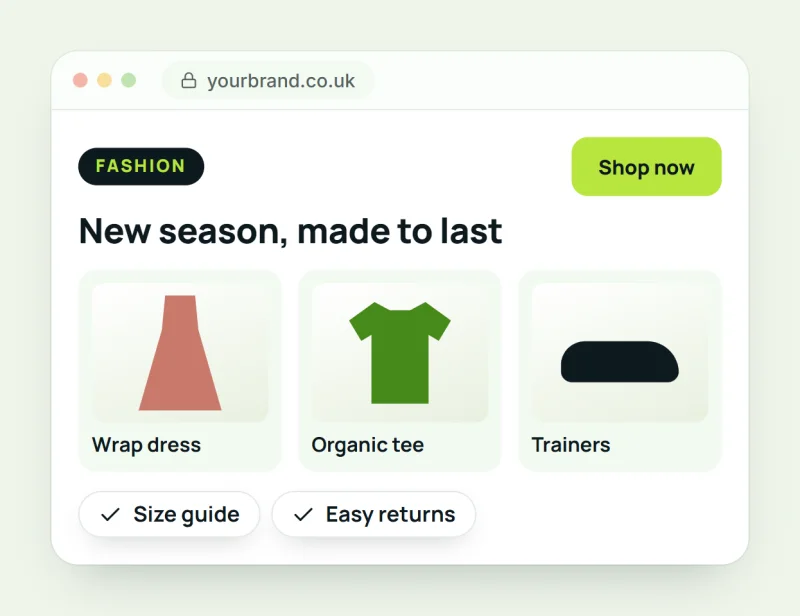
Illustration of a fashion Shopify store with clothing, a size guide and easy returns

Collections and filters shoppers actually use

Build collections around how people shop: by category (dresses, knitwear, outerwear), by occasion (workwear, wedding guest, holiday), by edit (new in, bestsellers, last chance) and by season. Add filters for size, colour, price, fit and fabric using metafields and Shopify's Search & Discovery app, or a dedicated tool such as Boost when the range is large. A shopper who can filter to their size, in stock, within budget is far closer to checkout than one scrolling an endless grid.

Win the product page: images, fit and confidence

  • Consistent photography: the same aspect ratio, background and crop across the range, with front, back, detail and on-model shots. A short video helps shoppers judge drape and movement.
  • Fit information: state the model's height and size worn, describe the cut (relaxed, true to size, cropped) and link a size guide that opens without leaving the page.
  • Fabric and care: composition, weight and care instructions held in metafields so they display in the same place on every product.
  • Delivery and returns promise: show UK delivery options and your returns window near the add-to-bag button, not buried in the footer.
  • Reviews with fit feedback: a reviews app that lets customers say whether an item runs small or large answers the question every shopper is asking.

Fashion stores are image-heavy, so compress files, serve sensible sizes and test on mobile data, where slow galleries quietly cost sales.
Hands pointing at paper wireframes and a phone showing a UX design

Plan drops, pre-orders and seasonal peaks

Fashion trades in moments: new-season launches, limited collaborations, Black Friday, Boxing Day and end-of-season sales. Shopify handles them well when you prepare:

  • Schedule product publishing in advance and test every drop on a duplicate theme first.
  • Offer pre-orders or back-in-stock alerts for sizes that sell out, so demand turns into email sign-ups rather than lost visits.
  • Automate routine merchandising with Shopify Flow, for example tagging low-stock lines for a last-chance edit or alerting the team when bestsellers run low.
  • Test discount codes and automatic discounts before the sale starts, and agree who can change prices on the day.

Make returns a growth lever, not just a cost

Returns are part of selling clothes online, and UK consumers generally have the right to cancel an online order within 14 days of delivery under the Consumer Contracts Regulations. The goal is not to make returning harder but to make it smarter:

  • Offer exchanges and store credit first, so a wrong size becomes a second sale rather than a refund.
  • Use a self-service returns portal such as Loop Returns to cut admin and keep customers informed.
  • Capture return reasons in a consistent format and feed them back into size guides, product copy and buying decisions.
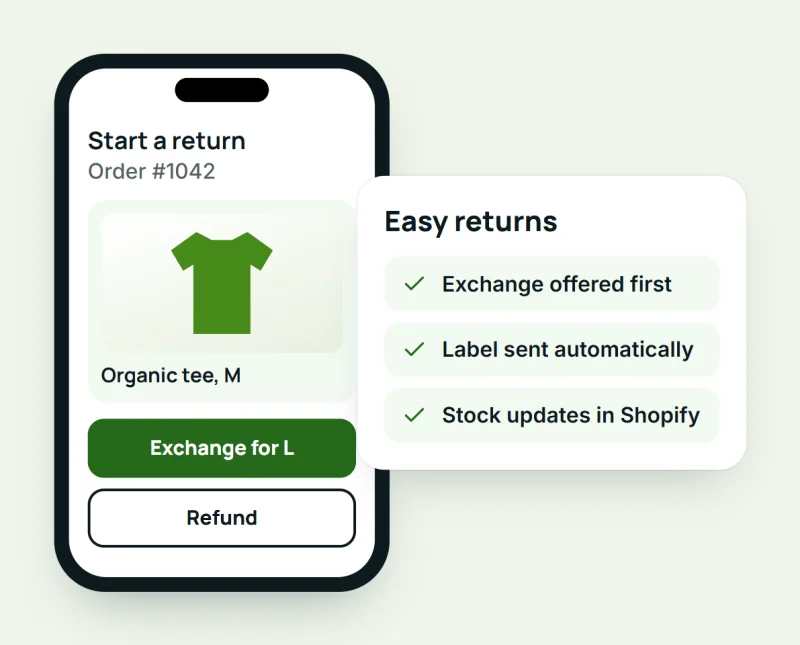
Illustration of a self-service returns portal offering an exchange before a refund

Grow repeat purchase and lifetime value

Paid social rarely gets cheaper, so every customer you keep makes the next campaign more profitable. Connect Klaviyo for welcome, browse abandonment, abandoned basket, back-in-stock and post-purchase flows, and segment by category and size so a shopper who buys petite denim hears about new petite denim. Pay-later options such as Klarna and Clearpay suit higher-value pieces like coats and occasion wear, while loyalty perks and early access to drops reward your best customers without blanket discounting.

Sell beyond the UK and offline

Shopify Markets lets you sell to the EU, US and beyond with local currencies, languages and pricing from one store. Since Brexit, decide whether EU customers pay duties and import VAT at checkout or on delivery, and say so clearly, because surprise charges at the door lead to refused parcels. If you run pop-ups, a flagship or wholesale accounts, Shopify POS and B2B features keep stock and customer data in one place.

Use AI to save time, and keep humans on brand

AI tools can draft product descriptions across colourways, suggest alt text, write collection intros and summarise reviews, freeing your team for creative work. Fashion copy lives or dies on tone of voice, though, so set clear guardrails and review everything before it is published. If you want a plan for where AI fits your trading calendar, our AI Consulting for Shopify Brands service maps the opportunities and the risks before you spend.

Where to start

If you can only tackle one area this quarter, fix product page fit information first, then filters, then retention flows. Each step builds on the last, and together they turn a pretty storefront into a store that sells season after season.
Fashion tips for your next sprint

  • Write a fit note for every product

    Add two or three lines to each product page that answer the fit question directly: how the garment is cut, what size the model is wearing and whether to size up or down. Store the note in a metafield so it appears in the same spot on every product, and update it whenever return reasons show a pattern. Shoppers trust specific, honest guidance, and your customer service team will field far fewer 'which size should I order?' messages during busy weeks. Keep the wording short enough to scan comfortably on a phone.

  • Shoot for the grid, not just the page

    Collection pages are where most browsing happens, so plan photography with them in mind. Keep the same crop, background and model framing across the range, and choose a second image that appears on hover, such as a back view or an on-model shot. A consistent grid looks premium, makes colours easy to compare and helps shoppers spot what they want quickly. Agree the shot list and image dimensions with your photographer before the shoot, so every new drop slots straight into the store without awkward re-cropping.

  • Never let a sold-out size dead-end

    When a popular size sells out, keep it visible but clearly marked, and offer a back-in-stock alert so the shopper leaves an email address rather than leaving the site. Those sign-ups also tell your buying team which sizes to reorder and in what depth. Pair the alert with suggestions for similar styles still available in that size, so the visit can still end in a sale. Review the waiting list each week and send a timely message the moment a restock lands.

  • Rehearse your biggest sale

    Before Black Friday, Boxing Day or an end-of-season sale, run the whole promotion on a duplicate theme: discount codes, automatic discounts, banners, sale collections and email timing. Check that sale prices display correctly on product cards, in the basket and at checkout, and that final-sale terms are shown clearly. Agree who can change prices on the day and how mistakes get rolled back. A calm rehearsal a week early is what makes launch morning feel routine instead of chaotic for everyone involved.

Next: scale fashion product content with AIAI Product Content & Descriptions

FAQs

Shopify fashion FAQs

Straight answers before you get in touch. More in our FAQs.

Which Shopify plan is right for a fashion brand?

Most new and growing labels start on a standard Shopify plan, which covers products, variants, discounts, Shopify Markets and point of sale basics. Shopify Plus becomes worth discussing when you run high-volume drops, need checkout customisation, want several expansion stores or have larger wholesale needs. Plans and features change, so we compare your requirements with Shopify's current plan pages during discovery and recommend the lowest plan that genuinely fits.

Should each colour be a separate product or a variant?

Both approaches work. Variants keep everything on one page, share reviews and are simpler to manage for small ranges. Separate products per colourway give each colour its own images, URL and collection placement, which helps when colour drives searches and merchandising. Many brands use separate products linked by swatches for hero lines and simple variants for basics. Decide before import, because restructuring later is fiddly.

How can we reduce returns on a Shopify fashion store?

Start with better information: detailed size guides, fit notes, the model's height and size worn, fabric details and honest photography. Add reviews that capture fit feedback, then log every return reason in a consistent format. Patterns soon reveal which styles run small or which images mislead. Offering exchanges before refunds won't cut return volume on its own, but it keeps far more revenue in the business.

What is the best way to show a size guide?

Place it right next to the size selector, open it in a drawer or pop-up so shoppers never lose their place, and make it specific to the product type, because jeans, dresses and footwear need different measurements. Include centimetres and inches, how to measure and a short fit note. Storing size charts as metaobjects lets you update a whole category in one go.

Can Shopify handle limited drops and pre-orders?

Yes. You can schedule products to publish at a set time, prepare drop pages on a duplicate theme and use a pre-order app for items not yet in stock. For high-demand launches, plan stock allocation, purchase limits and bot protection in advance, and test the full journey on mobile. Very large drops may justify Shopify Plus features, which we assess against your expected traffic.

Do fashion brands need a custom Shopify theme?

Not always. A well-chosen premium theme, styled to your brand with strong photography and the right sections, can launch a new label quickly. Our Starter store package from £1,995 ex VAT covers a theme-based build, while Growth from £4,995 ex VAT delivers a custom design store for brands that need a distinctive look, editorial layouts or bespoke features. Larger projects are quoted individually as Custom.

How should we photograph clothes for Shopify?

Shoot consistently, with the same background, lighting, crop and aspect ratio across the range, so collection grids look tidy. Capture front, back, side and detail shots, plus on-model images that show fit and drape. Short videos help with movement and texture. Export images at the dimensions your theme needs, compress them, and write descriptive alt text naming the product, colour and key details.

Which apps do UK fashion stores commonly use?

Typical stacks include an email and SMS platform such as Klaviyo, a reviews app that captures fit feedback, a returns and exchanges portal, search and filtering, pay-later payments such as Klarna or Clearpay, and Royal Mail or courier shipping tools. The right mix depends on your size and budget. Audit what each app earns before adding more, because every extra script can slow pages down.

How do we sell to EU customers from the UK?

Shopify Markets lets you set local currencies, prices, languages and domains for EU countries from your existing store. The bigger decision is customs: EU orders can attract import VAT and duties, so choose whether customers pay these at checkout or on delivery, and explain it clearly before they buy. Unexpected charges on the doorstep are a common cause of refused parcels and unhappy customers.

Can we use the same Shopify store for pop-ups and a shop?

Yes. Shopify POS runs on a tablet or phone with a compatible card reader and shares products, stock and customer profiles with your online store. A shopper who buys at a pop-up can later receive emails about their size online, and you can offer services such as buying online and returning in store. Larger retail estates may need POS Pro features, which we scope during discovery.

Should we offer Klarna or Clearpay?

Pay-later options can suit higher-value baskets such as coats, occasion wear and bundles, and plenty of UK fashion shoppers already know how they work. They carry provider fees and responsibilities around how you promote them, so check current terms on each provider's official site, present them responsibly and track whether they lift average order value without pushing up returns.

How do we run end-of-season sales without cheapening the brand?

Keep sales focused and time-limited. Move reduced lines into a dedicated sale collection rather than discounting everything, give loyal customers early access by email and avoid sitewide codes that train shoppers to wait. Mark final-sale items and their returns terms clearly. Afterwards, compare sell-through and margin by style, so next season's buying and pricing decisions start from evidence rather than instinct.

Keep growing your fashion store

Build a Shopify store your collections deserve

Our fashion specialists plan and build Shopify stores around the way clothes are really bought, from variant structure, filters and size guidance to drops, returns and Klaviyo retention, with a dedicated PM, 4-eyes QA before anything reaches you, weekly progress reports and a fixed price agreed before work begins. Whether you need a theme-based launch for a new label or a custom design for an established brand, we scope it clearly and show you exactly what is included. Prefer to see how we work first? Book a live walkthrough with our team on Zoom or Google Meet.

Get a quote Call WhatsApp (opens in new tab)