
Team marking up paper wireframes and colour swatches on a table

Shopify Growth

Shopify Marketing: The Performance Channels That Work for UK Brands

Which Shopify marketing channels pay back for UK brands? Compare Google, Meta, TikTok and email, then build a plan you can measure. Book a free call.

In this article (3 sections)
  1. Which Shopify marketing channels work for UK brands?
  2. How to measure Shopify marketing without fooling yourself
  3. A practical sequence for growing UK brands

Key takeaways

  • Shopify marketing works best as a system rather than a pile of separate campaigns. Google captures demand that already exists, Meta and TikTok create new demand, and email and SMS turn a costly first order into repeat revenue. Judge every channel by the job it does inside that system, not by its own dashboard.
  • Clean data comes before clever ads. Connect Shopify's Google & YouTube and Facebook & Instagram sales channels, send server-side purchase signals, and check that your cookie banner respects UK GDPR and PECR consent rules before any budget is scaled up.
  • Your product feed is creative work, not admin. Titles, images, GTINs, prices and stock status in Google Merchant Center decide which searches your Shopping ads appear for, so tidying the feed can move results as much as changing bids or budgets.
  • Measure the whole business, not platform-reported ROAS. Track blended marketing efficiency, contribution margin per order and new-customer revenue in one weekly view, because every ad platform will happily claim credit for the very same sale.
  • Plan around the UK retail calendar. Black Friday, Christmas last-posting dates, Boxing Day, Mothering Sunday and summer sales all shift costs and buying intent, so prepare creative, offers and stock weeks ahead instead of reacting once auction prices have already climbed.
  • Bring in outside help when the work outgrows your team. A specialist group can untangle tracking, feeds and creative testing faster than one stretched generalist, but you should always keep ownership of your ad accounts, pixels and customer data, whoever runs the campaigns day to day.

Most UK Shopify brands don't have a traffic problem; they have a channel-mix problem. Budget gets spread across every platform a sales rep pitches, results are judged on each platform's own reporting, and nobody can say which pound actually produced profit. Good Shopify marketing fixes that by giving each channel a clear job, a clear measure and a clear spending ceiling. This guide covers the channels that consistently earn their place for DTC brands, how to sequence them, and when it makes sense to bring in a specialist Shopify marketing agency rather than running everything in-house.

Which Shopify marketing channels work for UK brands?

Google Search and Shopping: capture existing demand

When someone in Bristol types "linen bedding king size", they are already shopping. Shopping ads and Performance Max put your product, price and image in front of them, while Search campaigns catch branded and high-intent queries. Shopify's Google & YouTube app syncs your catalogue to Merchant Center, but the sync is only as good as your data: descriptive titles, accurate GTINs, sharp images and correct delivery settings decide where you appear. Keep a separate brand campaign so a competitor bidding on your name never goes unanswered.
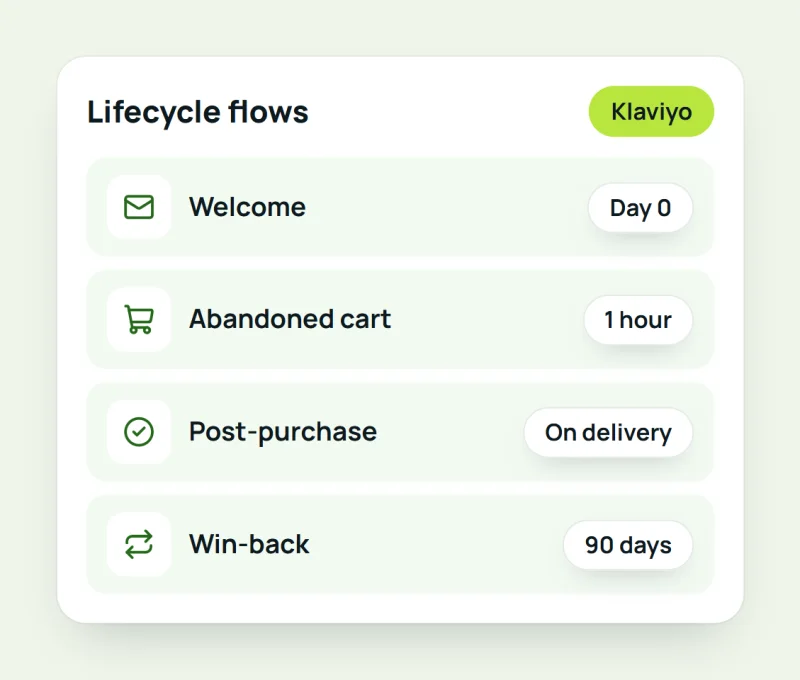
Illustration of email marketing flows: welcome, abandoned cart, post-purchase and win-back

Meta: create demand with creative that sells

Facebook and Instagram remain the main way to put a new brand in front of people who weren't searching for it. Meta's automated campaign types lean heavily on the algorithm, which means your creative now does most of the targeting. Test hooks, formats and offers rather than ever-narrower audiences, and feed the platform reliable purchase signals through Shopify's Facebook & Instagram channel and the Conversions API.

TikTok and Pinterest: test where customers browse

For beauty, fashion and gifting, TikTok can introduce products to large, engaged audiences, especially when paid spend amplifies creator content. Pinterest suits planned purchases such as homeware and weddings, where people save ideas long before buying. Treat both as tests with a fixed budget and a written success measure before you commit. Microsoft Advertising is another low-effort experiment: it can import existing Google Search and Shopping campaigns, so a trial takes little extra setup.

Email and SMS: the channels you own

Paid media rents attention; email and SMS keep it. Welcome, abandoned-checkout, browse-abandonment and post-purchase flows in Klaviyo turn expensive first orders into profitable customers. Every subscriber was earned through paid or organic effort, so list growth and flow revenue deserve the same weekly scrutiny as ad spend.

Laptop showing a dark analytics dashboard with charts

How to measure Shopify marketing without fooling yourself

Each ad platform reports the conversions it can claim, so adding them together nearly always overstates reality. Anchor decisions on numbers from Shopify itself: total revenue, new-customer revenue, contribution margin after ad spend, and marketing efficiency ratio (revenue divided by total marketing cost). Use platform data to optimise within a channel and blended data to set budgets between channels. When a channel's contribution is unclear, run a simple holdout, such as pausing it in one region for a few weeks, before cutting or scaling.

Where AI fits in

Automation now sits inside every major ad platform, and AI shopping assistants are becoming a discovery channel in their own right. Our hub on AI for Shopify Stores explains how structured product data and clear content help you appear in those newer surfaces as well as in traditional ads.

A practical sequence for growing UK brands

  1. Fix tracking and consent. Confirm purchase events fire once, with correct values, in Google and Meta.
  2. Clean the product feed. Clear Merchant Center warnings and rewrite weak titles.
  3. Launch core flows. Get Klaviyo automations live before scaling paid traffic.
  4. Prove one acquisition channel. Usually Google for existing demand or Meta for new products.
  5. Add tests deliberately. Introduce TikTok, Pinterest or affiliates one at a time, each with a budget cap.

Follow that order, review it weekly, and your spend becomes an investment you can explain to your finance director rather than a monthly gamble.

Quick wins before you scale spend

  • Write feed titles for searchers

    Lead product titles with what shoppers actually type: product type, key attribute, size or colour, then brand if it isn't yet well known. "Merino Crew Neck Jumper, Navy, Men's" beats a poetic name nobody searches for. Feed management apps let you override titles for Google without touching your storefront copy, so brand voice and search visibility no longer compete.

  • Match the ad to the landing page

    If an ad promises a bundle or a free UK delivery threshold, the page it lands on should show that same offer above the fold on mobile. Mismatched messages waste clicks you've already paid for, so build dedicated collection or landing pages for major campaigns instead of sending everyone to the homepage and hoping they find the offer.

  • Refresh creative on a rhythm

    Ad fatigue creeps in quietly: frequency rises, click-through rates slide and costs climb. Keep a steady pipeline of new hooks, short product demos and creator-style videos so you can rotate fresh assets in before performance drops, rather than scrambling for ideas once it already has. A simple monthly shoot day keeps the pipeline full.

  • Protect margin on promotions

    Before Black Friday or a summer sale, work out the break-even cost per order at the discounted price, including delivery, packaging and payment fees. Set campaign targets from that figure, not from last month's ROAS. Discounts change the maths, and ad platforms will never adjust your targets for you, however automated they claim to be.

Next step: get found in AI shopping answersAI Search Optimisation for Shopify

FAQs

Shopify marketing FAQs

Straight answers before you get in touch. More in our FAQs.

Which channel should a new UK Shopify store start with?

Start where intent is highest and measurement is clearest. For products people already search for, that is usually Google Shopping plus a small brand Search campaign. For a genuinely new product category, Meta is often better because it creates demand rather than waiting for it. Whichever you choose, get core email flows live first so the traffic you pay for has a way to come back.

How much should we spend on ads each month?

There is no honest single figure, because the right budget depends on your margins, average order value and how quickly you need cash back. Work backwards: decide the maximum you can pay to acquire a customer profitably, then set a test budget large enough to produce meaningful conversion data in a few weeks. Scale only once the numbers hold up in Shopify, not just in the ad platform.

Is Google Shopping worth it for a small catalogue?

Often, yes. A small catalogue is easier to optimise, because you can give every product a properly researched title, strong imagery and accurate attributes. Smaller stores tend to struggle when they rely on a raw feed and fully automated bidding with too little data. Start with your best sellers, watch the search terms report closely and expand once those products are profitable.

Do we need cookie consent for ad tracking in the UK?

Yes. Under UK GDPR and PECR, non-essential cookies and tracking pixels generally require the visitor's consent before they fire. Shopify provides a customer privacy banner and an API that apps can respect, and Google and Meta both support consent-aware measurement. Getting this right protects your brand and keeps your conversion data as complete as the rules allow. Take legal advice if your setup is unusual.

What counts as a good ROAS for a Shopify store?

A good ROAS is whatever keeps you profitable after product costs, delivery, payment fees and returns, so it varies widely between a low-margin electricals shop and a high-margin skincare brand. Calculate your break-even ROAS from your own margins, then set targets above it. Also watch new-customer revenue, because a campaign that only recaptures existing buyers can look brilliant while adding very little growth.

Should we run marketing in-house or hire an agency?

In-house teams know the brand intimately; agencies bring specialists across channels, tracking and creative without the cost of hiring each role. Many UK brands combine both, keeping strategy and brand voice internal while an agency runs ad accounts, feeds and reporting. If you choose an agency, insist on owning your ad accounts and data, and on transparent weekly reporting against agreed numbers.

How long before paid campaigns show results?

Ad platforms need conversion data before their automation performs well, so a new campaign usually goes through a learning phase where results swing around. Judge campaigns over weeks rather than days, avoid making big changes during that period, and agree in advance what success looks like. Early signals such as click-through rate and add-to-cart rate show whether you're on the right track.

Does email still matter if we're spending on paid social?

More than ever. Paid social is excellent at finding new customers, but every order it produces costs money. Email and SMS let you follow up for free: welcoming subscribers, recovering abandoned checkouts, cross-selling after purchase and winning back lapsed buyers. Brands that treat Klaviyo as an afterthought usually end up paying to reacquire the same customers again and again.

More reading for growing Shopify brands

Want a channel plan built around your margins?

Our performance team audits your tracking, product feed and current spend, then shows which channels deserve more budget, which need fixing first and which should be paused, all at a fixed price with a dedicated PM and weekly reporting, so you always know exactly what your money is doing. Everything starts under NDA, and nothing changes in your accounts until you approve it.

Get a quote Call WhatsApp (opens in new tab)